
7 nutrition tips to stay fit and healthy all winter
In winter, the days are shorter, the weather is often gloomy and the holidays feel far away… So many things push us to look for comfort, and sometimes that means eating a little more freely than usual, leaving us feeling heavier by the time spring comes around!
But it is also possible to stay well, keep feeling light, cope with the cold, stay positive, enjoy yourself and even love this season! Here are 7 nutrition tips to get through winter in great shape!
Load up on fruit rich in vitamin C
Good news: it’s the season for it! Oranges, clementines, mandarins, lemons and kiwis! Eat them as they are or drink them as juice — enjoy!
As for juices, of course, make them yourself and drink them right after squeezing the fruit, otherwise there won’t be many vitamins left.
You can easily have up to 4 pieces of fruit a day. You can also add exotic fruit: mango, pineapple, passion fruit. It’s delicious, good for your mood and brings a little sunshine into your day!
They will give you your daily dose of vitamin C, which contributes to the normal function of the immune system and to the reduction of tiredness and fatigue — very welcome during the cold months.

Eat fish, especially oily fish, for your vitamin D
Vitamin D is sometimes called « the sunshine vitamin » because it is the sun that allows us to make it. Ultraviolet B rays (UVB) hitting our bare skin trigger the production of vitamin D. That’s why we can run short of it in winter! Food generally provides no more than a third of our vitamin D needs. But it is a source you really shouldn’t neglect during the cold season!
So we encourage you to eat cooked salmon, marinated herring, cooked mackerel, sardines in oil or oysters! For those who like it, cod liver and its oil are very, very rich in vitamin D. We suggest eating these foods at least 4 times a week.

If you don’t like these foods, a vitamin D supplement may sometimes be needed. Talk to your doctor or pharmacist about it.
Enjoy seasonal vegetables for fibre, minerals and other vitamins
Nature is well designed: winter vegetables are rich in the fibre, minerals and vitamins your body needs at this time of year!
What you’ll find at the market right now:
- Root vegetables: from the classic orange carrot and its heirloom yellow, purple or white cousins, to purple-top or golden ball turnips, beetroot of every shape and colour, and lesser-known vegetables such as parsnips, swede or Jerusalem artichokes...

- All kinds of cabbage in every shape, size and colour!
- And don’t forget squash: musk squash, butternut, red kuri and pumpkins!
All these delicious vegetables can be made into soups, velvety purées, stir-fries, or braised or steamed. You can also make detox juices with some of them!
We encourage you to eat them at every meal: at least 2 per meal to get your share of minerals, fibre and vitamins!
And one tip: choose fresh produce — no tins, no ready meals, no frozen food! Treat yourself to fresh, quality ingredients: it doesn’t take more time and it’s better for you, your family, the growers and our planet! You probably know all this by heart already! And let’s not forget the pleasure of cooking a nice meal for the people you love while giving yourself a moment to relax and switch off!
Boost your fibre and mineral intake with whole grains
They are good friends of your digestion and your overall balance. Whole grains and pulses are best known for their fibre, but their mineral content shouldn’t be overlooked — especially zinc.
You’ll find whole grains in everyday foods such as bread, rice, wheat or quinoa. But be careful: make sure you choose the versions labelled « wholegrain », so you don’t confuse them with those made from refined grains.

Besides their fibre and minerals, they help you feel full for longer. When it’s cold and your body uses more energy, especially to maintain its temperature, these low-glycaemic-index carbohydrate foods are all the more interesting.
We suggest eating these foods 3 to 4 times a week.
Get enough plant protein by eating pulses (legumes)
The great thing about pulses is that they contain large amounts of plant protein, fibre, minerals and vitamins, while being low in fat.
Since plant proteins (except soy) are often lacking in certain amino acids, it’s important to combine grains and legumes in your meals so that all the essential amino acids are present.
Indeed, if just one amino acid is missing, the body can’t make full use of the protein.
Legumes such as broad beans, peas and lentils are rich in lysine, an amino acid lacking in grains, which in turn provide methionine. So by combining the two, you get all the essential amino acids.
Here are a few smart combinations: legumes + grain products or legumes + nuts or seeds.
We suggest eating these foods 3 to 4 times a week combined with whole grains.
Stay well hydrated to face the cold
We often remember to drink in summer when it’s hot, but much less once temperatures start to drop. Yet dehydration is just as common in winter, especially among older people and babies. Dry cold air is particularly dehydrating, and so is the heating in our homes and offices.

Good hydration is essential for your body to function properly. We are made up of about 65% water, and the water content varies from one organ to another: 83% for blood, 10% for fatty tissue. The brain is 70% water, as are the muscles. Water is therefore essential to keep our bodily functions running — all the more so because we lose it constantly! We start to feel thirsty once we have lost 1% of our water, and that has an immediate effect on mental and physical performance!
So we encourage you to drink juices, soups, broths and, of course, tea! On the other hand, limit your coffee and, of course, alcohol!
Make the most of winter to try a detox programme — why not a detox tea programme?
What is a detox programme? It’s a way to give your body a break and support its natural balance.
The detox programme has its roots in the principles of naturopathy, which favours a gentle, natural approach to well-being.
It traditionally accompanies the body’s own natural processes, in which the skin, liver, intestines and kidneys all play their part.
A detox tea programme is a form of detox that works over the long term and never puts the body under harsh strain. It is a gentle programme that brings real comfort. It has its roots in traditional Chinese medicine.
It uses different parts of plants, such as leaves, wood, bark, seeds and roots. These plants are chosen according to classifications developed by masters of Chinese medicine over centuries.
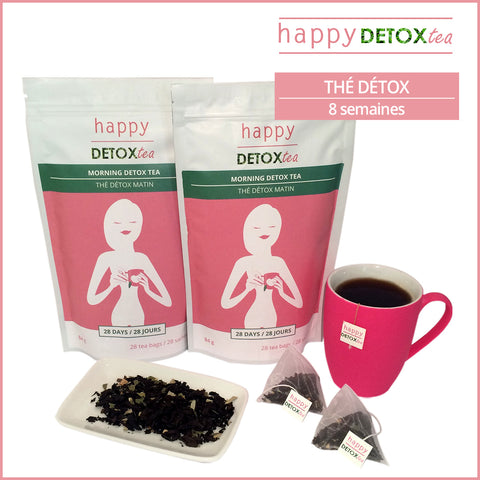
For the best experience, we recommend following a detox tea programme for at least 4 weeks, ideally 8 weeks: Detox Tea 4 or 8 weeks.
A detox tea programme is a gentle and pleasant way to look after yourself. It brings well-being and vitality, supports digestive comfort and helps you feel lighter day after day!